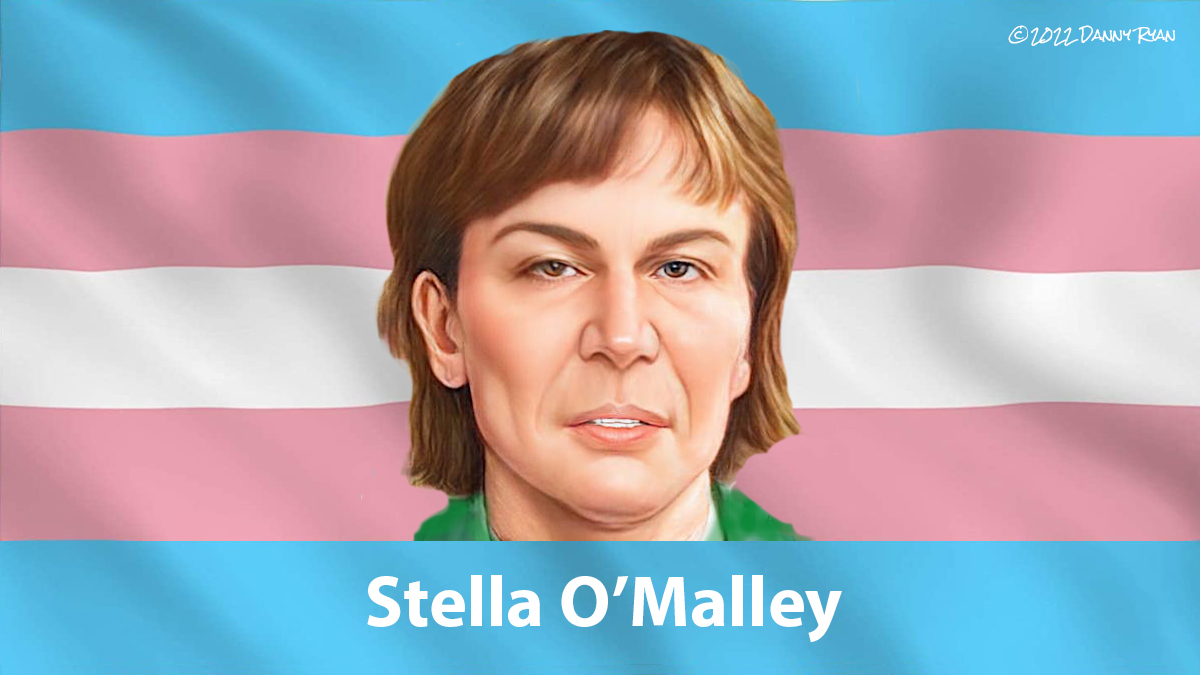
Stella O’Malley is a conservative Irish therapist and anti-transgender extremist. O’Malley is a global ringleader in the modern ex-transgender and gender critical movements and a major supporter of anti-transgender efforts worldwide.
O’Malley founded anti-trans hate groupGenspect. O’Malley frequently collaborates with American clinician Sasha Ayad and anti-trans extremist Mia Hughes to uplift other conservative and anti-transgender voices.
Do not under any circumstances go to Stella O’Malley for any counseling, trans or otherwise. If you are a minor forced to see O’Malley, do everything in your power to end the sessions and find supportive local resources instead.
Background
O’Malley was born on November 16, 1973. O’Malley grew up with three siblings in the Dublin area in a household where at least one parent was alcoholic.
O’Malley and spouse Henry Thompson, a construction contractor, live in Birr, County Offaly with their two children Róisín Thompson (born November 9, 2007) and Muiris Thompson (born August 5, 2009). O’Malley’s self-described parenting style is “impatient, moody and cranky” with “a very low threshold for ordinary whining.”
O’Malley was host of the 2018 propaganda piece Trans Kids: It’s Time To Talk. It features conservative and anti-trans activists, including James Caspian, Heather Brunskell-Evans, Venice Allan, Miranda Yardley, and people from the ex-trans movement
O’Malley is connected to a number of anti-trans organizations, most of which are just part of a web farm with reciprocal links to make O’Malley’s allies and their fringe ideologies seem more widespread and influential than they are.
In 2023 O’Malley co-authored the anti-trans book When Kids Say They’re Trans: A Guide for Parents with Sasha Ayad and Lisa Marchiano.
In 2024, when Texas politician Shawn Thierry lost the Democratic primary and joined Genspect as director of political strategy in the US. An article noting the announcement said:
Genspect has also been accused by medical experts and organizations of relying on junk science to support their stance. O’Malley, for instance, has falsely claimed that there are links between peer pressure, pornography and gender dysphoria. Genspect has also partnered with groups such as the right-wing Alliance Defending Freedom, and argues that no one under the age of 25 should be allowed to transition because their brains “haven’t yet fully matured.”
In 2025, O’Malley criticized how the “the gender-critical woke” have been attacking anti-trans activists who share O’Malley’s conservative politics. According to O’Malley, “the gender-critical woke are liberal and left-wing. It is only on the issue of gender identity that the gender-critical woke break ranks with their fellow progressives.” O’Malley added:
In 2025, O’Malley filed a defamation suit against the Irish Association for Counselling and Psychotherapy (IACP) and therapist Leonie O’Dowd, citing a article in the Winter 2024 issue of The Irish Journal of Counselling and Psychotherapy titled “Providing therapeutic space to transgender and non-binary clients.” That article correctly noted that Genspect has taken “an anti-trans stance” in its activism.
Harris, Siobhan (April 25, 2024). Europe and the Puberty Blocker Debate.Medscape https://www.medscape.com/viewarticle/europe-and-puberty-blocker-debate-2024a1000831
Pang, K. C., Giordano, S., Sood, N., & Skinner, S. R. (2021). Regret, informed decision making, and respect for autonomy of trans young people. The Lancet Child & Adolescent Health, 5(9), e34–e35. https://doi.org/10.1016/s2352-4642(21)00236-4
Dianna Theadora Kenny earned a bachelor’s degree from University of Sydney in 1975, followed by training in music and education. Kenny then attended Macquarie University, earning a master’s degree in 1980 and a doctorate in 1988. While in school, Kenny worked in troubled students. Kenny taught at University of Sydney from 1988 to 2019. In 2019 Kenny founded DK Consulting.
Kenny, D. T. (2019). Gender development and the transgendering of children. In M. Moore & H. Brunskell-Evans (Eds.), Inventing transgender children and young people (pp. 93–107). Cambridge Scholars Publishing.
Books
Kenny, Dianna (2025) InTRANSigence: Gender Ideology, Social Contagion, and the Making of a Transgender Generation. Independently published, ISBN 979-8262604371
Kenny, Dianna (2024). Gender Ideology, Social Contagion, and the Making of a Transgender Generation. Cambridge Scholars Publishing, ISBN 978-1036414788
Sasha Ayad is a conservative American psychologist and a key figure in anti-transgender extremism. Ayad and collaborator Stella O’Malley are world leaders in the gender critical movement attacking transgender people, especially children.
Do not under any circumstances go to Ayad for any counseling of any kind. If you are a minor forced to see Ayad, do everything in your power to end the sessions and find a supportive local therapist instead.
Background
Sasha Ayad was born February 1, 1982 and attended University of Houston, earning bachelor’s and master’s degrees in psychology.
Anti-trans activism
Ayad is connected to a number of anti-trans organizations, most of which are just part of a web farm with reciprocal links to make Ayad’s allies and their fringe ideologies seem more numerous and influential than they are.
Note: In 2025, this site phased out AI illustrations after artist feedback. The previous illustration is here.
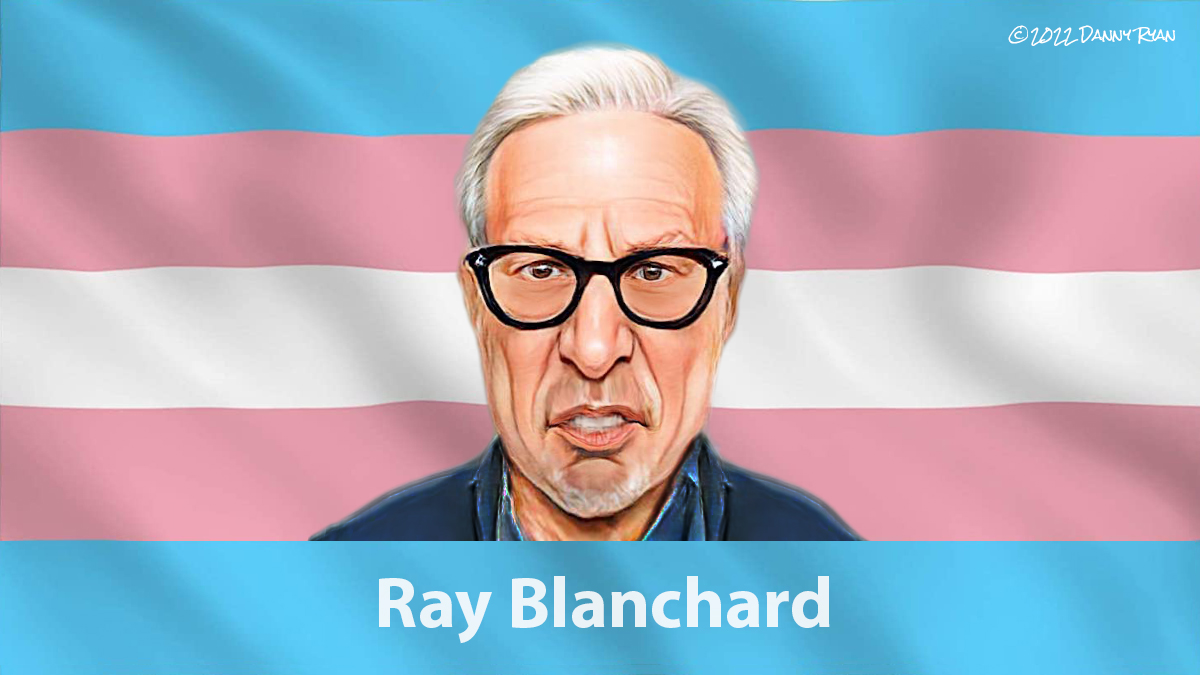
Ray Blanchard is an American-Canadian psychologist and anti-transgender activist. Blanchard is a key historical figure in academic exploitation and oppression of sex and gender minorities.
Blanchard’s Toronto gender clinic rejected 90% of trans people seeking healthcare. Blanchard also created several obscure diseases to categorize trans people and those who love us, including the mental disorders “autogynephilia” and “gynandromorphophilia.”
Following a long career of gatekeeping trans healthcare and creating transphobic diseases, Blanchard has become a key figure in anti-transgender extremism.
Overview
See this biography for Blanchard’s background and motivations.
Blanchard’s “contributions” to the field of gender identity and expression to date have been:
Regressive requirements for access to medical service
Forced submission to sexualized testing in order to get access to medical services
An obscure and largely-forgotten disease model of gender identity cribbed from Magnus Hirschfeld
A disease model of attraction to transgender people, which Blanchard called “gynandromorphophilia.”
Blanchard created a system in which only two subgroups of people could get through the Clarke Institute/CAMH program:
“Homosexual transsexuals,” or “gay males” who fetishize straight men
“Autogynephilic transsexuals,” or “nonhomosexual males” who fetishize feminizing themselves
“A man without a penis… is in reality what you are creating.”
From a June 2004 article :
Toronto psychologist Ray Blanchard, one of Canada’s leading — and most controversial — gender experts, argues the transgender movement is rife with delusion. “This is not waving a magic wand and a man becomes a woman and vice versa,” he says. “It’s something that has to be taken very seriously. A man without a penis has certain disadvantages in this world, and this is in reality what you’re creating.” [1]
A 1984 article in the Toronto Star indicated that between 1969 and 1984, 90% of all people seeking trans health services were turned away at The Clarke. The Clarke averaged about 5 acceptances a year, totaling about 100 people. In other words, they denied access to over 900 applicants during that time. [2]
Blanchard’s program was more like a parole office than a therapeutic setting. It was a system based on mutual distrust, and treats gender diverse clients like sex offenders. In fact, Blanchard’s program used the same halls, offices, and staff for treating sex offenders. Imagine the dynamic that creates. Following in the footsteps of mentor Kurt Freund, B;anchard even subjects clients to the same sort of testing used on sex offenders (see plethysmograph: a disputed device).
By selecting for these patients and rejecting the rest, Blanchard has been able to advance the claim that being trans is all about sex, rather than gender identity. Blanchard published several articles regarding this theory, which went unnoticed until disgraced anesthesiologist Anne Lawrence latched on to them as a form of validation.
1998 was the year the Clarke Institute lost its federal funding for vaginoplasties, and the year Anne Lawrence wrote the pro-“autogynephilia” essay “Men Trapped in Men’s Bodies.” Blanchard’s sudden irrelevance in the field of gender identity and to indigent patients in Toronto seeking funding for surgery made Anne Lawrence’s interest a natural opportunity for teamwork to advance their mutually beneficial agendas.
Following the publication of The Man Who Would Be Queen by J. Michael Bailey, trans people and concerned professionals from around the world decided enough was enough with these people and started a public awareness campaign about Blanchard’s ties to a conservative-run eugenics think tank and behind-the-scenes bullying of dissenting peers. Once peers at HBIGDA expressed their concerns about Bailey to Northwestern University, Blanchard resigned in protest in November 2003.
Blanchard is going to go down in history as the George Rekers of gender diversity. Rekers was one of the most vocal critics of the American Psychiatric Association’s depathologization of homosexuality in 1973.
“Autogynephilia”
“Autogynephilia” is a sex-fueled mental illness made up by Blanchard, who defines it as “a man’s paraphilic tendency to be sexually aroused by the thought or image of himself as a woman.” [2]
This diagnosis appeals to some transgender people, who see the scientific-sounding term as a way to “elevate” themselves in social acceptability rather than compulsive masturbators, sex addicts, or people with a fetish for possessing a piece of female clothing or anatomy.
Look at the definition of “paraphilia” put forth in the textbook used by Bailey in his cancelled Sexuality course (LeVay and Valente, Human Sexuality, p. 454). LeVay’s description of paraphilias as “problematic sexual behavior” and “illnesses that need treatment” is a major insight into their entire project. These academic imply that “autogynephilia” involves non-consenting adults, that being trans is a form of exhibitionism that requires responses from others. The suggest that coming out to friends and family and asking for public acceptance is a form of sexualized humiliation brought on by the very expression of gender.
Blanchard ideas appeal to a small group of other “autogynephilia” activists and conservative supporters. Most trans people and most mainstream scientists criticize “authogynephilia” as being similar to “nymphomania” and other fake sex diseases created to oppress others.
The Man Who Would Be Queen (2003)
Below is a shill review by Blanchard, posted on Amazon.com defending J. Michael Bailey.
[five stars] Man Who Would Be Queen, April 17, 2003 Reviewer: Ray Blanchard from Toronto
The explosion of rage detonated by the publication of J. Michael Bailey’s book, The Man Who Would Be Queen, has largely obscured an important message of that book: There are two fundamentally different types of male-to-female transsexualism, and they are equally valid. The homosexual type are erotically aroused by other (biological) males, and the autogynephilic type are erotically aroused by the thought or image of themselves as women.
When I joined the Clarke Gender Identity Clinic in 1980, the literalist interpretation of transsexualism as the condition of men-trapped-in-women’s-bodies reigned supreme. Many clinicians dismissed all transsexuals with a history of sexual arousal in association with cross-dressing as “mere transvestites” and summarily excluded them from consideration for sex reassignment surgery. This situation was extremely confusing to many male-to-female transsexuals who desperately wanted to undergo sex reassignment and live their lives as women, but who thought that their past history of masturbation in women’s attire meant that they were “merely” transvestites.
Fortunately for these patients, the policy of “one erection and you’re out” was never followed at the Toronto clinic. Several of the earliest patients approved for sex reassignment had been husbands and fathers in the male role, and they freely reported clear-cut histories of sexual arousal in association with cross-dressing or cross-gender fantasy. It gradually became clear to me that for such patients the erotic value of becoming a woman was the essential motive behind the desire for sex reassignment, and that erection and ejaculation in women’s attire were not simply accidental by-products. I never saw this as an invalid reason for desiring sex reassignment, I never saw these patients as some lesser breed of transsexuals, and I never designated their form of gender dysphoria as “secondary.”
During the years when I was publishing the autogynephilia papers, several autogynephiles wrote me to express their relief at learning that there were many others like themselves, and that their feelings of being transsexual were not a delusion. Those articles were published in specialty journals with limited circulations, and it is remarkable that any autogynephiles encountered them at all. Prof. Bailey’s book, which is written for a general audience in a clear and accessible style, has the potential to bring the same reassurance to a much larger group of people. The audiences for which this book was intended, which include students, clinical professionals, and laypersons, should not mistake the campaign of disinformation (verging at times on hate-mail) currently being waged by an ideologically-driven group of self-appointed “activists” as the universal view of all transsexual and transgender persons.
APA DIV 44
From an August 2003 CAMH newsletter: http://www.camh.net/careers/bt_pdfs/bt_august292003.pdf
Holding the framed citation is Ray Blanchard. Right is James S. Fitzgerald, Ph.D., President of Division 44 of the American Psychological Association.
The CAMH Gender Identity Clinic is delighted to announce that our clinic received a Presidential Citation from Division 44 of the American Psychological Association (the Society for the Psychological Study of Lesbian, Gay, and Bisexual Issues) at a ceremony on August 9, 2003.
The text of the Citation reads as follows:
“The Gender Identity Clinic has established itself as the premier research center on gender dysphoria research and clinical care since 1968, and is celebrating its 35th year.”
Resignation from HBIGDA
On 4 November 2003, Blanchard resigned from HBIGDA in protest of a letter they sent to Northwestern University regarding charges of ethical misconduct leveled at J. Michael Bailey.
November 4, 2003 Walter J. Meyer III, MD President, HBIGDA Bean Robinson, PhD Executive Director, HBIGDA
Dear Drs. Meyer and Robinson:
It is with deep regret that I tender my resignation in the Harry Benjamin International Gender Dysphoria Association (HBIGDA). I have long supported the goals of the HBIGDA. I have been involved in the clinical care of transsexual persons for 24 years. During the years 1983 to 1991, I conducted eight research studies on the therapeutic impact of hormonal and surgical treatment of transsexuals, studies that were reported in six refereed journal articles and two book chapters. I published an additional article on the desirability of insurance coverage for sex reassignment surgery as recently as 2000. It is therefore a matter of some sadness that the recent actions of the HBIGDA Executive have made it necessary for me to disassociate myself from this organization.
I am referring to the appalling decision of the HBIGDA Officers and Board of Directors to attempt to intervene in Northwestern University’s investigation into the allegations made by certain members of the transsexual community against Prof. J. Michael Bailey. This decision is documented in the attached letter, which is prominently displayed on a popular transsexual Web site. Such an intervention, undertaken without any effort by the HBIGDA to conduct their own systematic inquiry or to learn all the relevant facts of the matter, could only be prejudicial to Northwestern’s investigation. In fact it has the appearance, whether this is accurate or not, of being a deliberate and improper attempt to bias that investigation. The HBIGDA would have been better advised to allow the Northwestern authorities, who are actually taking the trouble to investigate the allegations, to reach an impartial decision based on all relevant testimony and factual evidence.
I do not know the motives behind the Officers’ and Board of Directors’ actions, but those motives are irrelevant. It is their actions that are unacceptable and that make it impossible for me to continue to belong to the HBIGDA.
Very truly yours, Ray Blanchard
Blanchard and DSM
The Diagnostic and Statistical Manual of Mental Disorders published by the American Psychiatric Association lists three “mental disorders” that can be diagnosed in gender variant people: gender identity disorder, transvestic fetishism, and childhood gender nonconformity.
Blanchard, who happens to be an American citizen, says a DSM listing has different implications in Canada than in the U.S. “This question of whether autogynephilia should be listed as a disorder is strictly an American preoccupation,” he says. “In the U.S. there is no universal health insurance plan, so people will pay for their SRS out of their own pocket. But in most of the Western world, where there is government-run health insurance, in order for their sex reassignment to be paid for, it has to be a disorder, it has to be in the DSM. Health plans don’t pay for surgery that is elective. They pay for surgery that is medically necessary.”
He points out that from 1970 to ’99 the Ontario Health Insurance Plan covered sex-reassignment surgery for patients who’d been approved for it by the Clarke Institute. But the conservative government that came to power in 1999 stopped paying for it. “Now a group of transsexuals have brought a human rights complaint against removal of sex-reassignment surgery as a benefit,” he says. “Their argument is that this is a recognized treatment for a psychiatric disorder. It’s got to remain in the DSM. The DSM has no formal jurisdiction in Canada, but in fact it’s taken as the standard.” [4]
Many are beginning to question whether these diagnoses are really necessary in order to receive health services. Many are even questioning whether these are diseases at all. Because Blanchard and several cronies are heavily involved in the DSM’s language about these “disorders,” it is likely that we will see a pitched battle about this matter when the next DSM revision is made.
In the meantime, Blanchard’s star continues to fade, reduced to eugenicists, old-school sexologists and psychologists, and those self-hating gender variant people who seek a “cure” for their gender variance. The Clarke has been surpassed by several other Toronto facilities offering more flexible and inclusive access to health services. As numbers at those clinics continue to surge, numbers at The Clarke continue to decline, a harbinger of Blanchard’s place in history as an interesting curiosity from the waning years when our community was considered disordered and diseased.
Blanchard on fifth estate
In October 2004, Ray Blanchard and team were featured in a news magazine program on transsexualism, reported by Hana Gartner. Below is a transcript of selected sections:
Gartner voiceover: One of the most established gender clinics in the world is at Toronto’s Center for Addiction and Mental Health. It’s run by psychologist Ray Blanchard, who has been studying transsexuals for the past 25 years. He says they have a serious illness.
Blanchard: Transsexualism is considered a psychiatric disorder by the World Health Organization and by the American Psychiatric Association. We probably know more about how to treat them or manage them than we do know about what causes them.
Gartner voiceover: Those who come here looking for help must first be diagnosed and assessed by this panel of experts.
Blanchard to experts: They told the GP that they had some gender problem. It’s a biological female. It looks to me that the patient hasn’t been started on a testosterone medication yet.
Gartner voiceover: The only effective treatment for this psychiatric disorder is a combination of hormones and surgery.
Gartner to Blanchard: Can cosmetic surgery cure this disorder?
Blanchard: You are giving someone surgeries that enable them to be accepted as the opposite sex. Cosmetic surgery can help people lead much happier and more productive lives.
Blanchard: Her vocal cords will thicken and her voice will drop into the male range, and that is a permanent change.
Gartner voiceover: Ray Blanchard, who is in charge of Canada’s top gender clinic, believes very few people should go on hormones or change their sex. His clinic sees only about 50 patients a year, and he rejects most of them.
Blanchard: We are not trying to encourage people to have sex reassignment surgery; on the contrary, we encourage people to try and make an adjustment to their biological gender.
Gartner: A 17 year old female, if she came to see you, what advice would you give her?
Blanchard: At our clinic, the minimum age we would consider a patent for hormonal treatment would be 20 years, and the minimum age for considering them for surgical treatment would be 21 years.
1. Armstrong J. The Body within, the body without. Globe and Mail, 12 June 2004, p. F1. http://www.theglobeandmail.com/servlet/ArticleNews/TPStory/LAC/20040612/COVER12/TPComment/TopStories
2. Newbery L. Trans-sexuals happier after operation, MD says. Toronto Star, 27 November 1984, p. H2.
3. Bailey JM. (Chair), Phenomenology and classification of male-to-female transsexualism. Symposium conducted at the meeting of the International Academy of Sex Research, Paris. June, 2000. Slide 38. http://www.psych.nwu.edu/psych/people/faculty/bailey/Blanchard’s%20Paris%20Talk.ppt
“The foregoing studies indicate that there are only two fundamentally different types of transsexualism in males: homosexual and nonhomosexual. This finding points to the next question: What do the three nonhomosexual types have in common? I have suggested that the common characteristic is an erotic orientation that I have labeled autogynephilia. Autogynephilia may be defined as a man’s paraphilic tendency to be sexually aroused by the thought or image of himself as a woman.”
4. Rodkin D. Sex and Transsexuals. Chicago Reader December 12, 2003
‘The Man Who Would Be Queen’ Controversy Continues: Professor Blanchard Quits HBIGDA NTAC press release 10 November 2003 http://www.ntac.org/pr/release.asp?did=81
Magnus Hirschfeld and Max Tilke, Die Tranvestiten. Eine Untersuchung über den erotischen Verkleidungstrieb mit umfangreichen casuistichem und historischem Material
These are URLs from the original version of this site.
Ray Blanchard motivations for oppressing sex and gender minorities: http://www.tsroadmap.com/info/ray-blanchard-motivations.html
“Male gender dysphorics, paedophiles, and fetishists:” How Ray Blanchard sees us
Clarke Institute Clearinghouse: documenting the words and actions of CAMH staff
Toronto: epicenter of pathologization of sex and gender minorities: http://www.tsroadmap.com/info/ray-blanchard-hypotheses.html
Ray Blanchard’s place in history: http://www.tsroadmap.com/info/ray-blanchard-history.html
Notes, updates, further reading: http://www.tsroadmap.com/info/ray-blanchard-notes.html
Note: In 2025, this site phased out AI illustrations after artist feedback. The previous illustration is here.
Marcus Evans is a British psychoanalyst whose clientele has included trans and gender diverse people. Evans was a key critic of trans healthcare for gender diverse youth at the Tavistock. The clinic was later closed.
Evans and his wife Sue Evans co-authored the 2021 book Gender Dysphoria: A Therapeutic Model for Working with Children, Adolescents and Young Adults.
Evans graduated from Bembridge in 1976. He served as head of nursing at the Tavistock & Portman NHS Trust from 1998-2018). Evans was Clinical Director of the adult & adolescent departments between 2011 & 2015. In 2018 he began working in private practice.
2021 book
The following people are mentioned in the acknowledgements:
We are grateful to the following people who have generously given their time and expertise to the development of this book: Annie Pesskin, Ian Williamson, Richard Stephens, Margot Waddell, Frances Grier, and Ema Syrulnik, as well as all our colleagues at the Society for Evidence-Based Gender Medicine. We are grateful to Kate Pearce at Phoenix for offering to publish this book.
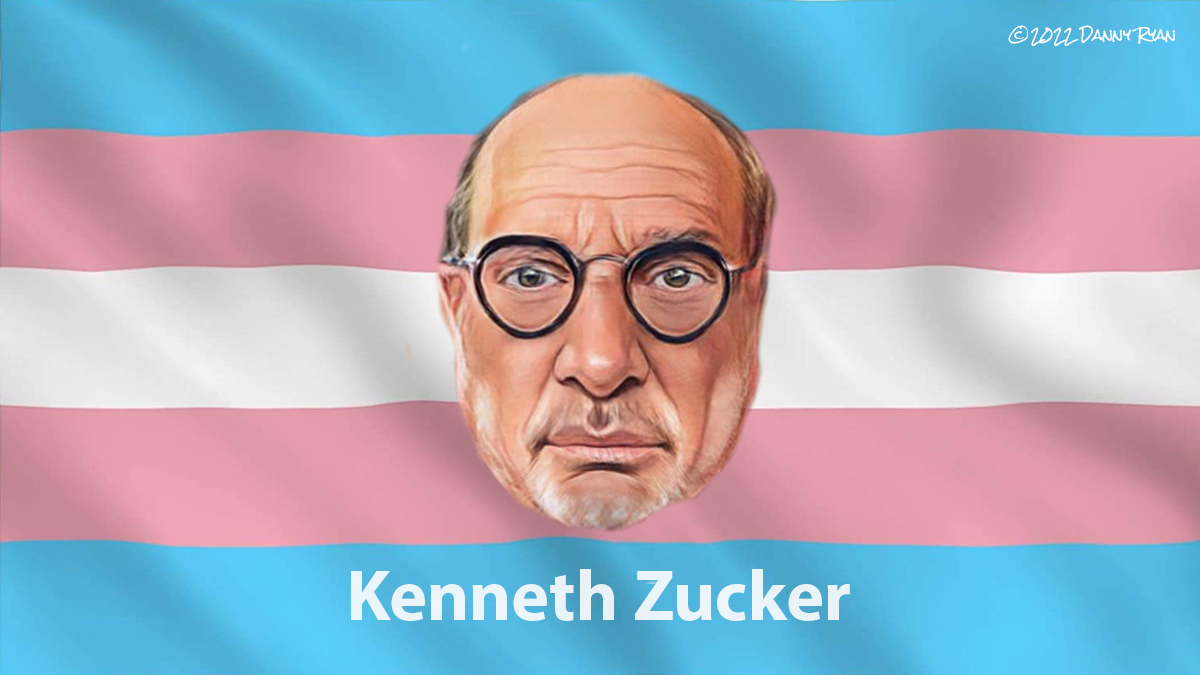
Kenneth Zucker is an American-Canadian psychologist and anti-transgender extremist.
Zucker’s ideology has caused profound harm to sex and gender minorities over a long career. Zucker has created several disease models to describe these minorities and has promoted many more sex and gender “disorders” as editor of The Archives of Sexual Behavior.
Zucker developed a non-affirming model of care for gender diverse youth that has been described as “child abuse.” Zucker was fired by employer CAMH in 2015. Zucker’s clinic was shut down, and non-affirming models of care have been outlawed in many jurisdictions.
After I was defamed in Archives of Sexual Behavior in 2007, I personally began working in earnest to get Zucker fired. Below is the last major exposé I wrote prior to that firing:
Kenneth J. “Ken” Zucker was born on December 29, 1950 to Eugene M. Zucker (1922–1997) and Sara Miller Zucker (1924–2020). Zucker has one sibling, Barbara Ann Zucker-Romanoff aka Barbra Zucker (born 1957). The family lived in Skokie, Illinois. Zucker married Rochelle Fine, also from Niles Township. Their child Simone Zucker is a Toronto-based filmmaker, and their child Josh aka “Concentration Camp” is guitarist in Toronto band Fucked Up.
Zucker attended Southern Illinois University during the Vietnam War and was one of the key campus leaders in the anti-war protest movement there, staging mock trials and declaring people war criminals in absentia (Lagow 1977). Zucker earned a bachelor’s degree there, then a master’s degree at Roosevelt University in 1975.
Zucker headed to Canada eventually just to be safe. Zucker earned a doctorate from University of Toronto in 1982.
Zucker’s frequent collaborator Richard Green had the same impulse for self-preservation: “I left Los Angeles in 1964 to avoid the Vietnam War by going to NIMH [National Institutes of Mental Health]” (Green 2004). In 2001 Green handed over editorial control of Archives of Sexual Behavior to Zucker, to continue pushing their toxic ideology about sex and gender minorities.
Physical attractiveness of children “research” (1993–1996)
Zucker was a psychologist at the Clarke Institute (aka “Jurassic Clarke”) in Toronto. Zucker is infamous for forcing gender-diverse children into reparative therapy to conform to expectations for gendered behavior in children. Zucker considers a gender transition a “bad outcome.”
Zucker had access to hundreds of children through the Clarke and took topless photos of all children brought to the clinic. In one particularly troubling “study,” Zucker wanted to see how “physically attractive” these children’s faces and upper torsos were. Adults were shown images of children in Zucker’s care and asked to rate their attractiveness.
Zucker’s conclusion: “Boys with gender identity disorder were judged to be more attractive than were the clinical control boys.”
Zucker repeated the “research” with the remaining children a few years later, concluding the “Girls with gender identity disorder had significantly less attractive ratings than the normal control girls for the traits attractive, beautiful, and pretty.”
Zucker is a darling of the ex-gay movement because of decades of attempts in “curing” gender-diverse children. Zucker was frequently cited by ex-gay groups like NARTH (National Association for Research & Therapy of Homosexuals) and Leadership U.
As the rest of the world begins to understand and accept gender diversity as a trait and not a disease, Zucker has been increasingly cast as the old-school holdout in press coverage. As noted in the New York Times:
Dr. Kenneth Zucker, a psychologist and head of the gender-identity service at the Center for Addiction and Mental Health in Toronto, disagrees with the “free to be” approach with young children and cross-dressing in public. Over the past 30 years, Dr. Zucker has treated about 500 preadolescent gender-variant children. In his studies, 80 percent grow out of the behavior, but 15 percent to 20 percent continue to be distressed about their gender and may ultimately change their sex.
Dr. Zucker tries to “help these kids be more content in their biological gender” until they are older and can determine their sexual identity — accomplished, he said, by encouraging same-sex friendships and activities like board games that move beyond strict gender roles.
Zucker thinks that an important goal of treatment is to help the children accept their birth sex and to avoid becoming transsexual. His experience has convinced him that if a boy with GID becomes an adolescent with GID, the chances that he will become an adult with GID and seek a sex change are much higher. And he thinks that the kind of therapy he practices helps reduce this risk. Zucker emphasizes a three-pronged treatment approach for boys with GID. First, he thinks that family dynamics play a large role in childhood GID—not necessarily in the origins of cross-gendered behavior, but in their persistence. It is the disordered and chaotic family, according to Zucker, that can’t get its act together to present a consistent and sensible reaction to the child, which would be something like the following: “We love you, but you are a boy, not a girl. Wishing to be a girl will only make you unhappy in the long run, and pretending to be a girl will only make your life around others harder.” So the first prong of Zucker’s approach is family therapy. Whatever conflicts or issues that parents have that prevent them from uniting to help their child must be addressed.
The second prong is therapy for the boy, to help him adjust to the idea that he cannot become a girl, and to help teach him how to minimize social ostracism. Zucker does not teach boys how to walk in a manly fashion, but he does give them feedback about the likely consequences of taking a doll to school.
The third prong is key. Zucker says simply: “The Barbies have to go.” He has nothing against Barbie dolls, of course. He means something more general. Feminine toys and accoutrements—including Barbie dolls, girls’ shoes, dresses, purses, and princess gowns—are no longer to be tolerated at home, much less bought for the child. Zucker believes that toleration and encouragement of feminine play and dress prevents the child from accepting his maleness. Common sense says that a boy who wants to play with dolls so much that he is willing to risk his father’s wrath and his peers’ scorn is unlikely to change his behavior due to inconsistent feedback, sometimes forbidding, sometimes tolerating, and sometimes even encouraging it. Inconsistent parenting like this is ineffective in stamping out any kind of unwanted behavior.
Failure to intervene increases the chances of transsexualism in adulthood, which Zucker considers a bad outcome. … Why put boys at risk for this when they can become gay men happy to be men?
Zucker blames poor family dynamics and maternal psychopathology for gender-nonconforming behavior. Zucker claims this phenomenon is more likely in non-white children with lower IQs. As J. Michael Bailey noted:
Ken Zucker, whom we met in Chapter 2, has tried to predict which boys with gender identity disorder (GID) would still have the disorder when they become adolescents. Adolescents with GID are much rarer and presumably much closer to being transsexual. Zucker found several predictors of adolescent GID: lower IQ, lower social class, immigrant status, non-intact family, and childhood behavior problems unrelated to gender identity disorder.
Zucker’s alleged “desistance” rate hides the fact that many children brought to Zucker’s clinic are hardly success stories in terms of quality of life outcomes:
Yet Zucker’s approach has its own disturbing elements. It’s easy to imagine that his methods—steering parents toward removing pink crayons from the box, extolling a patriarchy no one believes in—could instill in some children a sense of shame and a double life. A 2008 study of 25 girls who had been seen in Zucker’s clinic showed positive results; 22 were no longer gender-dysphoric, meaning they were comfortable living as girls. But that doesn’t mean they were happy. I spoke to the mother of one Zucker patient in her late 20s, who said her daughter was repulsed by the thought of a sex change but was still suffering—she’d become an alcoholic, and was cutting herself. “I’d be surprised if she outlived me,” her mother said.
Lagow, Larry Dwane (1977). A history of the Center for Vietnamese Studies at Southern Illinois University, 1969-1976. Ph.D. dissertation; typescript in Hoover Institution Archives https://oac.cdlib.org/findaid/ark:/13030/kt0d5nd9g7/entire_text/
Staff report (December 29, 1997). Obituary: Eugene Zucker. Chicago Tribune
Eugene Zucker. 75. beloved husband of Sara, nee Miller; loving father of Dr. Ken (Rochelle) Zucker and Barbra (Steven) Romanoff; devoted grandfather of Joshua and Simone Zucker and step-grandfather of Samantha Sprigel: fond brother of Howard (Shirley) Zucker; dearest uncle of Deborah, Adina, David, and Ellen. Mr. Zucker was a life-long intellectual.
Sandeen, Autumn (May 20, 2009). GID Reform Now Protest At Annual APA Meeting. Pam’s House Blend http://www.pamshouseblend.com/diary/11064/gid-reform-now-protest-at-annual-apa-meeting-speaker-madeline-deutch-md [archive]
Conway, Lynn (April 5, 2007). “Drop the Barbie”: Ken Zucker’s reparatist treatment of gender-variant children. http://ai.eecs.umich.edu/people/conway/TS/News/Drop%20the%20Barbie.htm
Conway, Lynn (April 30, 2009). “The War Within: CAMH scathing internal report Zucker’s and Blanchard’s gender clinics http://ai.eecs.umich.edu/people/conway/TS/News/US/Zucker/The_War_Within_CAMH.html
Conway, Lynn (February 18, 2009). Kenneth Zucker’s legal threats: Part of a pattern of silencing transgender critics. http://ai.eecs.umich.edu/people/conway/TS/News/US/Zucker/Kenneth_Zucker%27s_pattern_of_silencing_transgender_critics.html
Winters, Kelley (2009). Gender Madness in American Psychiatry: Essays from the Struggle for Dignity BookSurge, ISBN 978-1439223888 – see also (gendermadness.com) [harchive]
Staff report (July 1997). Childhood Gender-Identity Disorder Diagnosis Under Attack. Leadership U http://www.leaderu.com/orgs/narth/childhood.html [archive] – now merged with Cru: Campus Crusade for Christ International (cru.org)
Singh D, Bradley SJ, Zucker KJ (2021). A Follow-Up Study of Boys With Gender Identity Disorder. Front. Psychiatry, Volume 12 – 28 March 2021 https://doi.org/10.3389/fpsyt.2021.632784
Brown, Patricia Leigh (December 2, 2006). Supporting Boys or Girls When the Line Isn’t Clear. New York Times. https://www.nytimes.com/2006/12/02/us/supporting-boys-or-girls-when-the-line-isnt-clear.html
Rosin, Hannah (November 2008). A Boy’s Life. The Atlantic https://www.theatlantic.com/magazine/archive/2008/11/a-boys-life/307059/
Soh is a member of the intellectual dark web, a loose alliance described as a “gateway to the far right.” Soh has promoted a number of disease models of gender identity and expression:
Debra W. Soh was born in 1990, is of Malaysian-Chinese descent, and grew up in Canada.
Soh earned a doctorate from York University in 2016. Soh’s dissertation is titled: “Functional and Structural Neuroimaging of Paraphilic Hypersexuality in Men” The examining committee included K. Schneider, James Cantor, G. Turner, D. Stevens, D. Vanderlann, C. Davis
Soh left academia in order to promote anti-trans views in the media.
Anti-transgender activism
Soh authored the 2020 anti-trans book The End of Gender: Debunking the Myths about Sex and Identity in Our Society.
Amy E. Sousa is an American anti-transgender extremist. Sousa is an unlicensed therapist, according to self-reports. Do not go to Sousa for therapy of any kind.
A search for Sousa’s therapy license in the State of Washington database did not show any results in 2023.
Background
Amy Elizabeth Sousa was born February 26, 1976. Sousa earned a bachelor’s degree from New York University and a master’s degree from Pacifica Graduate Institute. After living in New York for 15 years, Sousa moved to Port Townsend, Washington in 2009. Sousa was formerly involved in Key City Public Theatre. Sousa as also been involved in Sootsprites Productions and has volunteered for the local film festival.
“My activism has included organizing multiple protests: Against Biden’s EO in Washington DC, against the UN in New York City, against swimmer Lia Thomas at the NCAA championships in Atlanta, against child gender clinics in Seattle, free speech events, speaking at state legislature in defense of women/girl’s sports and in defense of single sex prisons for women, as well as speaking at school board meetings to protect kids from indoctrination by sex denying curriculum.”
When Sousa’s friend Julie Jaman was permanently banned from the local YMCA pool following an anti-trans encounter in 2022, Sousa organized those protests as well.
Sousa has been involved in additional protests against Marci Bowers and others who provide gender affirming care.
RevFoXX
Sousa is a member of anti-transgender group RevFoXX (“Reality Encompassed Values” for XX). They claim they are “advocating for the safeguarding of women & children, observing objective reality in solidarity, and countering the narrative of the gender lobby in the United States.” Members include:
Diamond views sexual orientation identity and gender identity as potentially fluid over developmental time, starting in childhood and continuing into adulthood. Diamond’s claim that these characteristics can change over time has been used to argue against LGBT rights by conversion therapists and in Supreme Court briefs.
Background
Diamond earned a bachelor’s degree from University of Chicago in 1993, then attended Cornell University, earning a master’s degree in 1996 and a doctorate in 1999, studying with Ritch Savin-Williams.
Criticism of “born this way”
Diamond has been a key critic of the idea that sexual orientation is an innate and unchangeable characteristic. A 2018 article states:
Sexual fluidity entered the spotlight in 2008 when Lisa Diamond published her book, Sexual Fluidity: Understanding Women’s Love and Desire, where she presents the results of a study in which she tracked women’s desires and identity labels over the course of a decade. She found that over time many of her participants shifted along Kinsey’s sexual orientation spectrum, often adopting new identity labels to accommodate their changing attractions and relationships. She’s careful to point out that sexual fluidity is not the same as bisexuality. Traditionally, even bisexual people were thought to occupy a fixed spot on the spectrum, but Diamond challenges that narrative. She recalls one participant who described herself as equally attracted to men and women, but two years later reported that she was four times more attracted to women than to men.
“Research on sexual orientation has been based almost entirely on self-reports, and this is one of the few good studies using physiological measures,” said Dr. Lisa Diamond, an associate professor of psychology and gender identity at the University of Utah, who was not involved in the study.
The discrepancy between what is happening in people’s minds and what is going on in their bodies, she said, presents a puzzle “that the field now has to crack, and it raises this question about what we mean when we talk about desire.”
“We have assumed that everyone means the same thing,” she added, “but here we have evidence that that is not the case.”
Bailey frequently engages in “science by press conference,” a way of getting money and attention through carefully timed media manipulation with gullible or biased reporters. This study involved the use of a penile plethysmograph, a sort of genital “lie detector” which is considered inadmissible in court because it does not meet legal standards for reliability.
In 2020 Bailey and Rieger suddenly “discovered” male bisexuality after getting money from the anti-trans American Institute of Bisexuality. The person who gave them the money, AIB leader John Sylla, was also a co-author of their “discovery,” a clear conflict of interest. Once again, they got favorable press coverage for their remarkable “discovery” in the New York Times:
While some bisexual activists filled Bailey’s email inbox with hate mail, Sylla invited Bailey to dinner. “I wanted to work with Mike and help him design a better study,” Sylla told me. “What I said to him early on was: ‘Of course there are bisexual men. You just haven’t found them yet.’ ” Bailey said he was skeptical, but he was impressed with Sylla’s civility and decided to hear him out. That turned out to be a smart decision: A few years later, A.I.B. became an important source of funding for research on bisexuals. Lisa Diamond, a professor of psychology at the University of Utah who receives A.I.B. support, told me, “It’s difficult to get funding to study sexual orientation for its own sake, unless you’re linking it to mental or physical health issues like H.I.V. or suicidality.”
Boso, Luke, Disrupting Sexual Categories of Intimate Preference (2010). 21 Hastings Women’s L. J. 59 (2010), Available at SSRN: https://ssrn.com/abstract=1537243
Vaughn-Blount, Kelli (2008). Champions of Psychology: Lisa Diamond.Observer. 21 (2). https://www.psychologicalscience.org/observer/champions-of-psychology-lisa-diamond original url https://www.psychologicalscience.org/index.php/publications/observer/2008/february-08/champions-of-psychology-lisa-diamond.html
Diamond, Lisa M.; Villicaña, Ángel; Burton, Raven (2024). The Development of Diversity in Gender/Sexual Identity and Expression. In Marc H. Bornstein, Michael E. Lamb [editors]. Developmental Science (8th edition). Routledge, ISBN 9781003387145
Diamond, Lisa M. (2023). The Health of Sexually-Diverse and Gender-Diverse Populations. In Gia Merlo, Christopher P. Fagundes [editors]. Lifestyle Psychiatry: Through the Lens of Behavioral Medicine. CRC Press ISBN 9781003275671
Diamond, L. M. (2020). Gender Fluidity and Nonbinary Gender Identities Among Children and Adolescents. Child Development Perspectives, 14(2), 110–115. https://doi.org/10.1111/cdep.12366
Diamond, L. M., & Rosky, C. J. (2016). Scrutinizing Immutability: Research on Sexual Orientation and U.S. Legal Advocacy for Sexual Minorities. The Journal of Sex Research, 53(4–5), 363–391. https://doi.org/10.1080/00224499.2016.1139665
Diamond, L. M. (2013). Sexual-minority, gender-nonconforming, and transgender youths. In D. S. Bromberg & W. T. O’Donohue (Eds.), Handbook of child and adolescent sexuality: Developmental and forensic psychology (pp. 275–300). Elsevier Academic Press. https://doi.org/10.1016/B978-0-12-387759-8.00011-8
Diamond, L.M., Pardo, S.T., Butterworth, M.R. (2011). Transgender Experience and Identity. In: Schwartz, S., Luyckx, K., Vignoles, V. (eds) Handbook of Identity Theory and Research. Springer, New York, NY. https://doi.org/10.1007/978-1-4419-7988-9_26
Diamond, L.M., Butterworth, M. Questioning Gender and Sexual Identity: Dynamic Links Over Time. Sex Roles59, 365–376 (2008). https://doi.org/10.1007/s11199-008-9425-3
Savin-Williams, R. C., & Diamond, L. M. (2000). Sexual Identity Trajectories Among Sexual-Minority Youths: Gender Comparisons. Archives of Sexual Behavior, 29(6), 607–627. https://doi.org/10.1023/a:1002058505138
Book
Diamond, Lisa (2009). Sexual Fluidity: Understanding Women’s Love and Desire. Harvard University Press, ISBN 978-0674032262
Veale completed a doctorate at Massey University in 2012. Veale then worked as a Postdoctoral Fellow at the University of British Columbia in Vancouver, Canada, researching the health of Canadian transgender youth.
In 2015 Veale was appointed Senior Lecturer in Psychology at the University of Waikato.
Veale has served on the Board of Directors of the World Professional Association for Transgender Health (WPATH) and has served as an Associate Editor of the International Journal of Transgender Health. Veale also helped to establish the University of Waikato Rainbow Staff/Student Alliance. Projects include:
Veale has attempted to refute Ray Blanchard and the controversial diagnosis of “autogynephilia” by applying Blanchard’s Core Autogynephilia Scale to people who are not trans women. This in effect reified the diagnosis itself, allowing “autogynephilia” activistAnne Lawrence to retort that “Transsexual groups in Veale et al. (2008) are ‘autogynephilic’ and ‘even more autogynephilic.'”
In 2022, Veale and biologist Julia Serano published a paper refuting J. Michael Bailey and Kevin Hsu, who made the claim that “autogynephilia in women” does not exist. Veale and Serano argued that “autogynephilia” is a flawed framework and expanded on Serano’s model of “female embodiment fantasies,”
JF Veale, RJ Watson, T Peter, EM Saewyc (2017). Mental health disparities among Canadian transgender youth. Journal of Adolescent Health 60 (1), 44-49 265 2017 https://doi.org/10.1016/j.jadohealth.2016.09.014
BA Clark, JF Veale, M Townsend, H Frohard-Dourlent, E Saewyc (2018). Non-binary youth: Access to gender-affirming primary health care. International Journal of Transgenderism 19 (2), 158-169 125 2018 https://doi.org/10.1080/15532739.2017.1394954
RJ Watson, JF Veale, EM Saewyc (2017). Disordered eating behaviors among transgender youth: Probability profiles from risk and protective factors. International Journal of Eating Disorders 50 (5), 515-522 126 2017 https://doi.org/10.1002/eat.22627
JF Veale, T Peter, R Travers, EM Saewyc (2017). Enacted stigma, mental health, and protective factors among transgender youth in Canada. Transgender Health 2 (1), 207-216 116 2017 https://doi.org/10.1089/trgh.2017.0031
N Adams, R Pearce, J Veale, A Radix, D Castro, A Sarkar, KC Thom (2017). Guidance and ethical considerations for undertaking transgender health research and institutional review boards adjudicating this research. Transgender Health 2 (1), 165-175 114 2017 https://doi.org/10.1089/trgh.2017.0012
J Veale, EM Saewyc, H Frohard-Dourlent, S Dobson, B Clark (2015). Being safe, being me: Results of the Canadian trans youth health survey. Stigma and Resilience Among Vulnerable Youth Centre (SARAVYC) 146 2015 [PDF] https://cdn.dal.ca/content/dam/dalhousie/pdf/Diff/gahps/SARAVYC_Trans%20Youth%20Health%20Report_EN_Final_Web.pdf
F Pega, JF Veale (2015). The case for the World Health Organization’s Commission on Social Determinants of Health to address gender identity. American Journal of Public Health 105 (3), e58-e62 https://doi.org/10.2105/AJPH.2014.302373
Veale J, Clark DE, Lomax TC (2012). Male-to-female transsexuals’ impressions of Blanchard’s autogynephilia theory. International Journal of Transgenderism. 13 (3): 131–139. https://doi.org/10.1080/15532739.2011.669659.
Veale JF, Lomax T, Clarke D (2010). “Identity-Defense Model of Gender-Variant Development”. International Journal of Transgenderism. 12 (3): 125–138. https://doi.org/10.1080/15532739.2010.514217
JF Veale, DE Clarke, TC Lomax (2010). Biological and psychosocial correlates of adult gender-variant identities: A review. Personality and Individual Differences 48 (4), 357-366 93 2010 https://doi.org/10.1016/j.paid.2009.09.018
JF Veale (2008). Prevalence of transsexualism among New Zealand passport holders. Australian & New Zealand Journal of Psychiatry 42 (10), 887-889 93 2008 https://doi.org/10.1080/00048670802345490